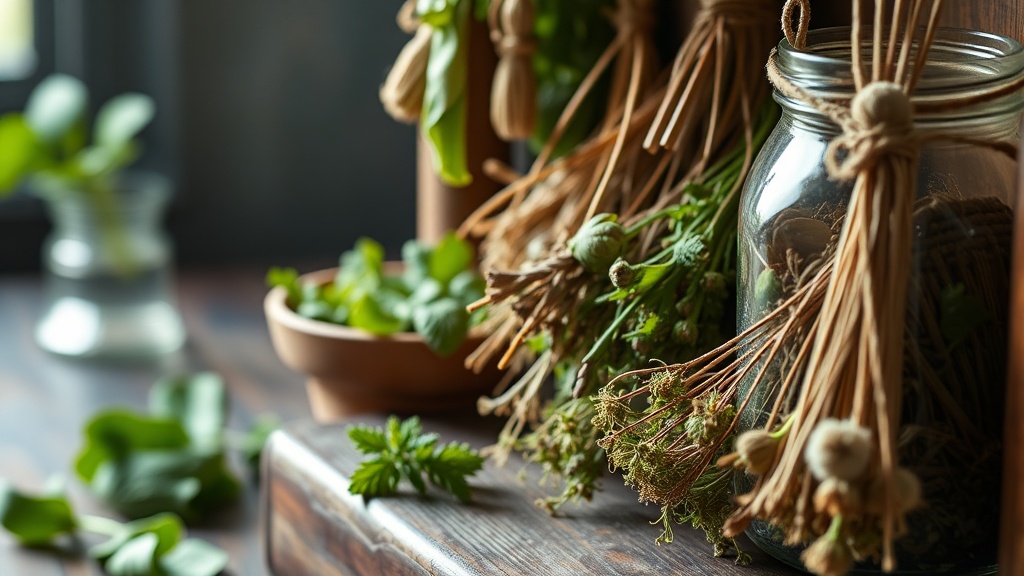
How to Dry Fresh Herbs at Home for Natural Remedies and Teas

Drying fresh herbs at home is one of the simplest ways to preserve flavor, save money, and build a natural wellness pantry. This guide covers four proven drying methods—air drying, dehydrating, oven drying, and microwave drying—plus how to store herbs properly and which varieties work best for teas and remedies. Whether there's a surplus from the garden or a great find at the Kelowna Farmers' & Crafters' Market, these techniques will keep herbs useful for months.
What Are the Best Methods for Drying Fresh Herbs at Home?
The best methods are air drying, using a food dehydrator, oven drying, and microwave drying—each suited to different herbs, climates, and schedules. Some herbs (like rosemary and oregano) have low moisture content and air dry beautifully. Others (like basil and mint) hold up better with controlled heat.
Here's the thing: the method matters less than the conditions. Herbs need low humidity, good airflow, and protection from direct sunlight. Sunlight bleaches color and weakens volatile oils—the compounds responsible for both flavor and therapeutic properties.
Air Drying
Air drying is the oldest technique. It's cheap, requires no electricity, and works wonderfully for sturdy herbs.
Best for: rosemary, sage, thyme, oregano, lavender, bay leaves
- Harvest herbs in the morning after dew has evaporated.
- Shake off dirt and remove damaged leaves.
- Bundle 5–10 stems together with twine or a rubber band.
- Hang upside down in a warm, dry, dark room with decent airflow.
- Check after 1–2 weeks. Leaves should crumble between the fingers.
The catch? Humidity. In damp climates, mold sets in before herbs fully dry. A small fan helps. In the Okanagan Valley, where summer air stays dry, this method rarely fails.
Dehydrator Drying
A food dehydrator offers the most consistent results. Models like the Excalibur 3926TB or the Nesco FD-75A Snackmaster have adjustable thermostats and fans that circulate warm air evenly.
Best for: basil, cilantro, parsley, mint, lemon balm, chamomile
- Set the temperature between 95°F and 115°F (35°C–46°C).
- Spread herbs in a single layer on mesh trays.
- Drying takes 1–4 hours depending on thickness.
- Check frequently—overdrying destroys delicate oils.
Dehydrators cost more upfront (the Excalibur runs around $250–$300), but for anyone processing large batches of medicinal herbs, the investment pays off quickly.
Oven Drying
Oven drying works in a pinch. It's faster than air drying but demands attention.
Set the oven to its lowest temperature—usually 170°F (77°C)—and prop the door open slightly with a wooden spoon to let moisture escape. Leaves go on a parchment-lined baking sheet. Most herbs dry in 1–3 hours. That said, ovens run hot. Basil can turn brown and bitter if the temperature spikes even briefly.
Microwave Drying
Microwave drying is the fastest option for small quantities. Layer herbs between two paper towels and microwave in 30-second bursts, flipping between rounds. Most batches finish in 2–3 minutes total. Worth noting: this method can scorch herbs easily, so it's better for testing than bulk preservation.
| Method | Time Required | Best Herbs | Pros | Cons |
|---|---|---|---|---|
| Air Drying | 1–2 weeks | Rosemary, sage, thyme | No cost, preserves oils well | Weather dependent, slow |
| Dehydrator | 1–4 hours | Basil, mint, parsley | Consistent, low heat | Upfront equipment cost |
| Oven | 1–3 hours | Most leafy herbs | Fast, no special gear | Risk of overheating |
| Microwave | 2–3 minutes | Small batches | Extremely fast | Uneven drying, easy to burn |
How Do You Store Dried Herbs So They Stay Potent?
Store dried herbs in airtight glass containers away from heat, light, and moisture. Darkness is non-negotiable—UV light degrades the very compounds that make herbs worth keeping.
Ball Mason jars (the 8-ounce wide-mouth version) are the gold standard. They're inexpensive, inert, and easy to label. Avoid plastic bags long-term; they let air in and can impart off-flavors.
Keep jars in a pantry or cupboard—not above the stove or near a window. Temperature swings cause condensation, which leads to mold. A cool, stable environment (ideally 60°F–70°F) extends shelf life dramatically.
Label each jar with the herb name and drying date. It's a small step that prevents confusion six months later. Whole leaves keep longer than crushed or ground herbs. Only crumble them right before use to expose the minimum surface area to air.
Which Herbs Work Best for Natural Remedies and Teas?
Chamomile, peppermint, lemon balm, ginger, lavender, and echinacea are among the most reliable herbs for home remedies and therapeutic teas. Each has a long history of traditional use and solid modern research backing common applications.
For sleep and relaxation, chamomile and lavender are hard to beat. Dried chamomile flowers can be steeped into a gentle tea that promotes calm. Lavender buds add a floral note to blends and work well in sachets for stress relief. Peppermint and ginger, on the other hand, shine for digestion. A strong peppermint tea after meals soothes bloating. Ginger—dried into slices or powder—warms the stomach and eases nausea.
Lemon balm (a member of the mint family) has mild antiviral properties and a bright, citrusy flavor. It's often combined with valerian root in sleep formulations. Echinacea is widely used at the first sign of a cold, though evidence on its effectiveness is mixed. The National Center for Complementary and Integrative Health offers a balanced overview of what the research currently shows.
Here's the thing: not every herb is safe for everyone. St. John's Wort interacts with antidepressants. Licorice root can raise blood pressure. Anyone taking prescription medications should check with a healthcare provider before using medicinal herbs regularly. The Mount Sinai Health Library maintains an excellent herb database with safety notes and drug interactions.
How Long Do Dried Herbs Actually Last?
Most dried herbs retain good flavor and potency for 1–3 years when stored properly. Leaves and flowers fade faster than roots and seeds. Culinary herbs (basil, oregano, dill) tend to lose flavor before medicinal herbs lose their active compounds, but neither lasts forever.
The sniff test is the best judge. Crush a leaf between the fingers. If the aroma is faint or musty, the herb has passed its prime. For teas, weak scent almost always means weak brew. For remedies, potency drops alongside volatile oil concentration—so old herbs simply don't work as well.
Rotation helps. Dry smaller batches more often rather than storing massive quantities for years. Many home herbalists in British Columbia follow a simple rule: use culinary herbs within one year, and medicinal leaves and flowers within two. Roots and barks (like ginger, licorice, or dandelion root) can stretch to three years if kept bone-dry.
Can You Dry Herbs in a Humid Climate?
Yes, but it requires extra care. Humidity is the enemy of herb preservation because moisture invites mold before drying finishes.
In humid regions, a dehydrator becomes almost necessary. If air drying is the only option, choose the smallest bundles possible—3–5 stems instead of 10. Space bundles far apart. Run a fan continuously. Some people dry herbs inside paper bags (with holes punched for airflow) to protect them from dust while still allowing circulation.
Worth noting: ovens and microwaves become more attractive in wet climates precisely because they bypass ambient humidity entirely. The University of Minnesota Extension has detailed guidance on adapting drying techniques to different climates.
Building a Home Apothecary on a Budget
Starting a home herb pantry doesn't require a farm. A few pots on a sunny balcony in Kelowna can produce more basil and oregano than one household can use. Local nurseries like Art Knapp Plantland carry starter plants for mint, thyme, and sage. For bulk drying, the Kelowna Farmers' & Crafters' Market sells seasonal bundles of lavender and chamomile at reasonable prices.
Storage supplies are cheap. A case of Ball Mason jars costs less than $15. Labels can be handwritten. A basic Nesco Snackmaster dehydrator retails for around $70—less than the cost of a few months of store-bought Traditional Medicinals or Celestial Seasonings tea boxes.
"The best herb is the one you know how to use—and the one you grew or dried yourself."
Start with one or two easy herbs. Dry them well. Store them dark. Brew a cup of homegrown peppermint tea on a cold evening, and the effort pays for itself in the first sip.
Steps
- 1
Harvest and Clean Your Herbs
- 2
Bundle and Hang to Air Dry
- 3
Store in Airtight Containers